Classic Cocktails
Bloody Caesar Recipe: Canada's National Cocktail Guide
Master the authentic Bloody Caesar recipe with Clamato juice, vodka, and savory spices. Learn the Canadian brunch classic's history, garnishes, and variations.

Advertisement
Bloody Caesar Recipe: Canada's National Cocktail Guide
When Canadians think brunch, they don't reach for a Bloody Mary—they reach for a Bloody Caesar. This savory, spicy, uniquely Canadian cocktail has become so beloved north of the border that it's earned the title of Canada's unofficial national cocktail. With over 350 million Caesars consumed annually in Canada alone, this distinctive drink outsells its American cousin, the Bloody Mary, by a staggering 5-to-1 ratio in the Great White North.
What makes the Bloody Caesar so special? The secret lies in one unexpected ingredient: Clamato juice. This blend of tomato juice and clam broth creates a savory, umami-rich base that's both briny and satisfying. Combined with premium vodka, zesty seasonings, and often outrageous garnishes, the Caesar has evolved from a Calgary hotel bar creation to an icon of Canadian food culture.
Whether you're a curious American wondering what all the fuss is about, a Canadian looking to perfect your technique, or a brunch enthusiast seeking your next signature drink, this comprehensive guide will teach you everything you need to know about the bloody caesar recipe.
The Canadian Invention Story: Walter Chell and 1969
Every great cocktail has an origin story, and the Bloody Caesar's tale is distinctly Canadian—polite, creative, and a little bit unusual.
In 1969, Calgary was preparing to open a new Italian restaurant called Marco's at the Calgary Inn (now the Westin Hotel). The hotel's restaurant manager, Walter Chell, was tasked with creating a signature cocktail to celebrate the opening. Chell, a seasoned bartender with years of experience, wanted to craft something that captured the essence of Italian cuisine.
The Inspiration Moment
Chell's inspiration came from one of Italy's most beloved dishes: spaghetti alle vongole (spaghetti with clams). He began experimenting, thinking about how to translate those flavors—tomato, clam, and savory seasonings—into liquid form.
After testing over 300 variations over three months, Chell landed on his winning formula: vodka mixed with a blend of tomato juice and clam broth, seasoned with Worcestershire sauce and hot sauce, and served with a celery salt rim. The drink was an instant hit when Marco's opened in May 1969.
From Calgary to National Icon
What started as a restaurant promotional cocktail quickly spread across Canada. The key to its rapid success was Chell's partnership with Mott's, the juice company. In 1969, Mott's had just launched Clamato—a pre-mixed blend of tomato juice and clam broth designed as a standalone beverage. The Caesar provided the perfect cocktail application for their new product.
Mott's began promoting the Caesar recipe nationally, and Canadians embraced it with patriotic fervor. By the 1980s, the Bloody Caesar had become synonymous with Canadian brunch culture, Sunday mornings, and celebratory occasions. Today, it's so ingrained in Canadian identity that many Canadians are surprised to learn it's virtually unknown in the United States.
Why "Caesar"?
The name "Bloody Caesar" references both Julius Caesar (fitting for the Italian restaurant theme) and the "bloody" family of cocktails. Some sources suggest Chell also drew inspiration from the classic Caesar salad, though the cocktail shares no actual ingredients with the salad beyond the Roman emperor reference.
The Classic Bloody Caesar Recipe
Ready to make an authentic Canadian Caesar? Here's the recipe that's stood the test of time since Walter Chell's original creation.
Ingredients:
- 1.5 oz vodka (premium, smooth vodka works best)
- 4-5 oz Clamato juice (freshly opened for best flavor)
- 2-3 dashes Worcestershire sauce
- 2-4 dashes hot sauce (Tabasco is traditional)
- Celery salt (for rim and seasoning)
- 2 dashes freshly ground black pepper
- Pinch of prepared horseradish (optional but recommended)
- Fresh lime wedge
- Ice cubes
Glassware: Highball or pint glass (12-16 oz)
Garnishes:
- Celery stalk
- Lime wedge
- Dill pickle spear
- Pickled beans or asparagus (optional)
Instructions:
-
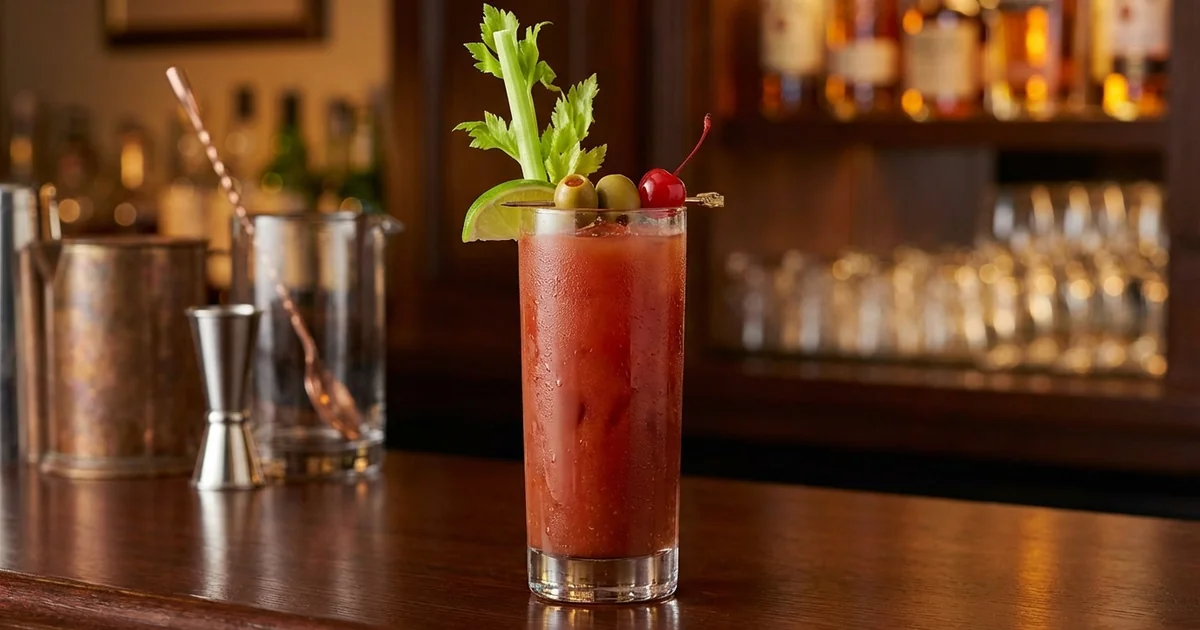
Rim the glass: Run a lime wedge around the rim of your highball glass. Pour celery salt onto a small plate and dip the rim to coat evenly. This signature rim is non-negotiable for an authentic Caesar.
-
Fill with ice: Add ice cubes to fill the glass completely. Fresh, cold ice is essential.
-
Add the vodka: Pour 1.5 oz of premium vodka over the ice.
-
Add Clamato juice: Pour 4-5 oz of Clamato juice into the glass. Adjust the amount based on your glass size and preferred strength.
-
Season generously: Add 2-3 dashes of Worcestershire sauce, 2-4 dashes of hot sauce, freshly ground black pepper, and a small amount of horseradish if using.
-
Stir thoroughly: Using a bar spoon or long spoon, stir gently but thoroughly to combine all ingredients. Lift from bottom to top to ensure proper mixing.
-
Taste and adjust: This is critical. Sample your creation and adjust the seasonings to your preference. More hot sauce for heat, more Worcestershire for savory depth, or more Clamato for a milder drink.
-
Garnish lavishly: Add your celery stalk, lime wedge, pickle spear, and any additional garnishes. In Canada, more is more when it comes to Caesar garnishes.
-
Serve immediately: The Bloody Caesar is best enjoyed fresh and cold.
Time: 5 minutes | ABV: Approximately 8-10%
Pro Tip: The key to a perfect Caesar is balance. The Clamato should be savory and briny without being overly fishy, and the spices should enhance rather than overwhelm.
Understanding Clamato Juice: The Secret Ingredient
The defining characteristic of a Bloody Caesar is Clamato juice, and understanding this unique ingredient is essential to mastering the bloody caesar recipe.
What is Clamato?
Clamato is a proprietary blend created by Mott's that combines:
- Tomato juice (the dominant flavor)
- Clam broth (providing umami and brininess)
- Spices (including celery seed and onion)
- High fructose corn syrup (for subtle sweetness)
- Citric acid (for brightness)
The result is a savory, slightly briny juice that's more complex than plain tomato juice. The clam component is subtle—you shouldn't taste "fish" but rather a deep, oceanic savory note that enhances the overall umami profile.
Clamato vs Tomato Juice
The difference between a Bloody Caesar and Bloody Mary comes down to this single ingredient:
Clamato (Caesar):
- Savory, briny, umami-rich
- Slightly thicker texture
- More complex flavor profile
- Subtle seafood notes
- Pre-seasoned with spices
Tomato Juice (Bloody Mary):
- Purely vegetable-based
- Cleaner tomato flavor
- Blank canvas for customization
- No seafood elements
- Requires more seasoning
For those wondering about the bloody caesar vs bloody mary debate, the Clamato is truly the dividing line. Canadians prefer the added complexity and savory depth of Clamato, while Americans tend to favor the cleaner tomato profile.
Where to Buy Clamato
In Canada: Clamato is available in every grocery store, corner store, and liquor store. It's as common as orange juice.
In the United States: Clamato can be found in most major supermarkets (Walmart, Target, larger grocery chains), typically in the juice aisle or the Hispanic foods section. Mott's Clamato is the most widely available brand.
Outside North America: Clamato can be harder to find but is sometimes available at specialty food stores or online retailers. Some bartenders make their own clam-tomato blend by mixing tomato juice with a small amount of clam juice (start with a 10:1 ratio).
Making Your Own Clamato Alternative
If you can't find commercial Clamato, you can approximate it:
Homemade Clamato Mix (makes about 6 oz):
- 5 oz quality tomato juice
- 0.75 oz bottled clam juice
- 1/4 teaspoon celery salt
- Pinch of onion powder
- Dash of sugar or simple syrup
- Squeeze of fresh lemon
Combine all ingredients and stir well. Refrigerate for at least 30 minutes to let flavors meld. Use within 2 days.
Vodka Selection: The Foundation
While Clamato is the star, vodka provides the alcoholic backbone of your Caesar. Choosing the right vodka makes a noticeable difference.
Best Vodka Characteristics for Caesars
Smooth and Clean: You want a vodka without harsh edges or strong flavoring. The robust Clamato and spices will dominate, but rough vodka adds unpleasant notes.
Mid-Range Quality: You don't need ultra-premium vodka since the mix will mask subtle nuances, but avoid bottom-shelf options that add rubbing alcohol overtones.
Neutral Profile: Save your flavored vodkas for other cocktails. The Caesar needs a neutral base that won't compete with the savory seasonings.
Recommended Vodka Brands by Budget
Budget-Friendly ($15-25):
- Smirnoff: Reliable, widely available, smooth enough for mixed drinks
- Absolut: Clean flavor, Swedish quality, consistent
- Svedka: Surprisingly smooth for the price point
Mid-Range ($25-40):
- Tito's Handmade Vodka: American craft vodka, smooth and neutral
- Ketel One: Dutch vodka with excellent mixability
- Grey Goose: French premium vodka, ultra-smooth (though arguably overkill for Caesars)
Canadian Options:
- Iceberg Vodka: Made with actual iceberg water from Newfoundland
- Crystal Head Vodka: Created by Dan Aykroyd, smooth and pure
- Alberta Pure Vodka: Prairie grain vodka, clean and affordable
Vodka Mistakes to Avoid
Don't use flavored vodka: Pepper vodka might seem logical, but it creates an unbalanced flavor profile. Stick with plain vodka.
Don't use vodka straight from the freezer: Room temperature vodka integrates better with the other ingredients. The ice in your glass provides all the cooling you need.
Don't over-pour: While it might be tempting to make a "strong" Caesar, too much vodka overwhelms the delicate Clamato balance. Stick to 1.5 oz (2 oz maximum for a very strong version).
Worcestershire and Hot Sauce: The Savory Balance
The magic of a great Caesar lies in the interplay of savory, spicy, and tangy elements. Worcestershire sauce and hot sauce are the key players.
Worcestershire Sauce: Umami Depth
Worcestershire sauce adds:
- Umami richness: Fermented anchovies provide deep savory notes
- Complexity: Tamarind, vinegar, molasses, and spices create layers
- Balance: Slight acidity cuts through the richness
How Much to Use: Start with 2-3 dashes (about 1/4 teaspoon). Worcestershire is potent—too much makes the drink taste like steak sauce.
Best Brands:
- Lea & Perrins: The original and still the best
- Heinz: More widely available, slightly different spice profile
- French's: American alternative with a tangier profile
Hot Sauce: Customizable Heat
Hot sauce brings:
- Controlled spice: Adjustable heat level to individual preference
- Vinegar brightness: Cuts through rich Clamato
- Complexity: Different hot sauces offer unique flavor profiles
How Much to Use: Start with 2-4 dashes (about 1/4 teaspoon) and adjust. Remember, you can always add more but can't take it away.
Hot Sauce Options:
Classic Choice: Tabasco Original
- Traditional Caesar choice
- Vinegar-forward with moderate heat
- Clean, simple pepper flavor
Canadian Favorite: Frank's RedHot
- Slightly milder than Tabasco
- More complex flavor profile
- "Buffalo wing" association beloved in Canada
For Heat Seekers:
- Valentina or Cholula: Mexican-style, mild to moderate with deeper spice notes
- Sriracha: Garlicky, slightly sweet, medium heat
- Louisiana Hot Sauce: Cayenne-based, tangy and sharp
- Habanero Sauce: Serious heat with fruity undertones
For Extra Heat:
- Ghost Pepper Sauce: Extreme heat, use sparingly
- Scorpion Pepper Sauce: Professional-level spice
- Reaper Sauce: Only for the truly brave
Finding Your Perfect Spice Level
Mild Caesar (Family-Friendly):
- 1-2 dashes hot sauce
- 2 dashes Worcestershire
- Skip the horseradish
- More Clamato, less vodka
Medium Caesar (Classic):
- 3-4 dashes hot sauce
- 2-3 dashes Worcestershire
- Small pinch of horseradish
- Standard ratios
Spicy Caesar (Heat Lover):
- 5-6 dashes hot sauce (or use spicier variety)
- 3 dashes Worcestershire
- 1/4 teaspoon horseradish
- Add fresh jalapeño slice or pickled jalapeño garnish
Extra Hot Caesar (Extreme):
- 6-8 dashes very hot sauce
- 3-4 dashes Worcestershire
- 1/2 teaspoon horseradish
- Rim glass with spicy seasoning salt instead of celery salt
- Garnish with fresh chili peppers
The Celery Salt Rim: Signature Touch
The celery salt rim is arguably the most recognizable element of a Bloody Caesar. It's not just decoration—it fundamentally changes the drinking experience.
Why Celery Salt?
Celery salt brings:
- Aromatic complexity: Celery seed aroma hits your nose before each sip
- Salinity: Enhances savory flavors throughout the drink
- Textural contrast: Slight crunch against smooth liquid
- Visual appeal: Professional, finished appearance
How to Create the Perfect Rim
Method 1: Lime Wedge (Classic)
- Cut a fresh lime wedge
- Run the cut side around the entire rim of the glass
- Pour celery salt onto a small plate
- Tilt the glass at 45 degrees and roll the rim through the salt
- Tap gently to remove excess
Method 2: Clamato Dip (Bartender Favorite)
- Pour a small amount of Clamato juice into a shallow dish
- Dip the glass rim into the Clamato
- Roll the rim through celery salt on a plate
- This creates better adhesion than lime juice
Method 3: Partial Rim (Customizable)
- Only rim half the glass
- Allows drinkers to choose salted or unsalted sips
- Accommodates different salt preferences
Celery Salt Alternatives and Upgrades
Classic Celery Salt: The traditional choice, available in any grocery store spice aisle.
Seasoning Salt Blends:
- Old Bay Seasoning: Adds seafood spice complexity, very popular in coastal regions
- Tajín: Mexican chili-lime seasoning, adds citrus and mild heat
- Montreal Steak Spice: Robust, peppery, very Canadian
- Caesar Rim Salts: Pre-made blends specifically for Caesars (widely available in Canada)
Homemade Caesar Rim Salt: Combine in a small bowl:
- 2 tablespoons celery salt
- 1 tablespoon coarse sea salt
- 1 teaspoon black pepper
- 1/2 teaspoon paprika
- 1/2 teaspoon garlic powder
- 1/4 teaspoon cayenne pepper (optional)
Mix thoroughly and store in an airtight container. Makes enough for 10-12 drinks.
Spicy Rim (Heat Lovers):
- Mix celery salt with cayenne pepper (2:1 ratio)
- Add chili powder for smoky heat
- Use Tajín for citrusy spice
Rim Mistakes to Avoid
Too Much Salt: A heavy salt rim overwhelms the drink and makes it undrinkable. A light, even coating is perfect.
No Salt: Skipping the rim entirely misses the signature Caesar experience. Even salt-conscious drinkers should try a partial rim.
Stale Celery Salt: Old celery salt loses its aromatic celery notes and becomes just salty. Replace annually.
Garnish Traditions: From Simple to Spectacular
If there's one area where Caesar culture has exploded with creativity, it's garnishing. What started with a simple celery stalk has evolved into an entire culinary art form.
Classic Caesar Garnishes
The Traditional Trinity:
- Celery Stalk: The original, doubles as a stirrer and adds fresh crunch
- Lime Wedge: Essential for acidity, squeeze into drink before stirring
- Dill Pickle Spear: Briny, crunchy, perfectly complements Clamato
Why These Work:
- All three provide textural contrast to the smooth drink
- They're substantial enough to feel like a snack
- Each adds complementary flavors (fresh, citrus, briny)
- They're sturdy enough to stay on the glass
Elevated Classic Garnishes
Pickled Vegetables:
- Pickled green beans (pickled asparagus beans)
- Pickled asparagus spears
- Pickled carrots
- Pickled okra
- Giardiniera (Italian pickled vegetable mix)
- Pickled jalapeños or pepperoncini
Protein Additions:
- Bacon strips: Crispy bacon is a Canadian Caesar staple
- Pepperoni or salami slices: Nod to the Italian inspiration
- Cooked shrimp: Classic seafood pairing (2-3 grilled or boiled shrimp)
- Smoked salmon: Luxurious and elegant
- Cocktail sausages: Mini smokie sausages
- Beef jerky: Bold, savory, conversation-starting
Cheese Cubes:
- Cheddar cheese (classic Canadian choice)
- Pepper jack (adds spice)
- Bocconcini (Italian fresh mozzarella balls)
- Cheese curds (extra Canadian points)
Over-the-Top Caesar Garnishes
In Canada, especially in Toronto and Calgary, restaurants and bars compete to create the most outrageous Caesar garnishes. These "meal Caesars" are Instagram-famous and genuinely filling.
Full Meal Garnish Ideas:
- Sliders or mini burgers
- Chicken wings (2-3 pieces)
- Pulled pork sliders
- Grilled cheese sandwich (half or mini)
- Pizza slice (personal size)
- Poutine (in a separate container, served alongside)
- Lobster tail (steamed or grilled)
- Oysters on the half shell (2-3 oysters)
- Mac and cheese bites
- Fried chicken tenders
- Onion rings
How to Assemble Monster Garnishes:
- Use a large skewer or multiple skewers
- Layer ingredients thoughtfully (heaviest on bottom)
- Consider a separate small plate for items too large for skewers
- Balance weight to prevent tipping the glass
- Make sure garnishes are fully cooked and food-safe
When to Go Big:
- Special occasions and celebrations
- Brunch with friends
- Hangover recovery meals
- Restaurant or bar promotional events
- Bachelor/bachelorette parties
Garnish Presentation Tips
Skewer Assembly:
- Thread items onto bamboo skewers or metal cocktail picks
- Create visual interest with color variation
- Ensure stable balance across the glass rim
- Don't overload—garnishes should enhance, not overshadow
Plate Presentation:
- Wipe any drips from the outside of the glass
- Place on a cocktail napkin or small plate
- Consider a separate appetizer plate for large garnishes
- Add a small fork or cocktail pick for eating garnishes
Professional Touches:
- Slap fresh herbs (like dill or basil) to release aroma before adding
- Score lime wedges so they perch nicely on the rim
- Use cherry tomatoes for color and Caesar connection
- Dust the rim area with paprika or black pepper for visual pop
Bloody Caesar vs Bloody Mary: The Great Debate
Understanding the differences between these two savory cocktail cousins helps appreciate what makes each unique.
Key Differences
| Element | Bloody Caesar | Bloody Mary |
|---|---|---|
| Base Juice | Clamato (tomato + clam broth) | Tomato juice |
| Flavor Profile | Savory, briny, umami-rich | Vegetable-forward, tomato dominant |
| Origin | Canada (Calgary, 1969) | France/USA (1920s-1930s) |
| Cultural Status | Canadian national cocktail | American brunch classic |
| Rim | Celery salt (traditional) | Celery salt or spice blend |
| Garnishes | Often extravagant, meal-like | Traditional to moderate |
| Texture | Slightly thicker | Varies by tomato juice |
| Popularity | Dominant in Canada | International standard |
Flavor Profile Comparison
Bloody Caesar:
- More complex savory notes
- Seafood/oceanic undertones
- Richer umami depth
- Slightly sweeter (Clamato has added sugar)
- Pairs exceptionally well with seafood
Bloody Mary:
- Cleaner vegetable flavor
- Pure tomato taste
- More customizable (blank canvas)
- Can be made more or less thick
- Pairs well with breakfast and brunch foods
Which One Should You Make?
Make a Bloody Caesar if you:
- Love savory, umami-rich flavors
- Enjoy seafood and briny tastes
- Want something uniquely Canadian
- Prefer a slightly sweeter savory cocktail
- Are curious about the Caesar cult following
Make a Bloody Mary if you:
- Prefer pure tomato flavor
- Don't enjoy seafood flavors
- Want more control over seasoning
- Follow a vegetarian/vegan diet (no clam)
- Are in the United States where Clamato is less common
Make Both if you:
- Love savory brunch cocktails
- Enjoy comparing and contrasting similar recipes
- Are hosting a brunch party (offer both options)
- Want to understand the full spectrum of bloody drinks
Learn more about the American classic in our comprehensive Bloody Mary Recipe Guide.
Can You Convert Between Them?
Caesar to Mary: Simply replace Clamato with tomato juice. You may need to add slightly more Worcestershire sauce and salt to compensate for Clamato's built-in seasoning.
Mary to Caesar: Replace tomato juice with Clamato. Reduce added salt slightly since Clamato is pre-seasoned.
Popular Caesar Variations
Once you've mastered the classic bloody caesar recipe, these variations offer exciting new flavor dimensions while maintaining the essential Caesar character.
Spicy Caesar
Turn up the heat with this fiery variation:
- Use 4-6 dashes of habanero or ghost pepper hot sauce
- Add 1/2 teaspoon prepared horseradish
- Muddle 2-3 slices of fresh jalapeño in the glass before building
- Rim with Tajín or cayenne-spiked celery salt
- Garnish with pickled jalapeño peppers
Perfect for: Heat lovers and those who want extra kick
Mezcal Caesar (Smoky Caesar)
Replace vodka with mezcal for a smoky, sophisticated twist:
- 1.5 oz mezcal (instead of vodka)
- Standard Clamato and seasonings
- Add a pinch of smoked paprika
- Rim with Tajín or chili-lime salt
- Garnish with grilled lime and bacon
Flavor Profile: Smoky, complex, slightly earthy
Gin Caesar (Red Snapper Caesar Hybrid)
Use gin instead of vodka for botanical complexity:
- 1.5 oz London Dry gin
- Standard Clamato and seasonings
- Add 2-3 drops of celery bitters
- Garnish with cucumber spear and lemon
Perfect for: Gin lovers who want something savory
Asian-Inspired Caesar
Give your Caesar an umami boost with Asian flavors:
- Standard vodka and Clamato base
- Replace Worcestershire with soy sauce (2 dashes)
- Add fresh grated ginger (1/4 teaspoon)
- Add a small amount of wasabi or wasabi paste
- Garnish with pickled ginger and nori
Flavor Profile: Ultra-umami, slightly exotic, complex
Michelada Caesar (Mexican Caesar)
Combine Caesar with Mexican Michelada style:
- 1 oz vodka (reduced)
- 3 oz Clamato
- 4 oz light Mexican lager (Modelo, Corona, Pacifico)
- Standard seasonings
- Rim with Tajín
- Garnish with lime and jalapeño
Perfect for: Hot summer days, lighter alcohol option
Tequila Caesar (Bloody Maria Caesar Hybrid)
Use tequila for an agave-forward version:
- 1.5 oz blanco or reposado tequila
- Standard Clamato and seasonings
- Use agave nectar instead of any added sugar
- Rim with Tajín
- Garnish with cilantro and lime
Flavor Profile: Bright, agave-sweet, perfect for taco brunch
Virgin Caesar (Non-Alcoholic)
All the flavor, none of the alcohol:
- Omit the vodka entirely
- Use 6-7 oz Clamato (increase quantity)
- Add all standard seasonings
- Add 1/2 oz fresh lime juice for brightness
- Consider adding a dash of non-alcoholic bitters for complexity
- Full garnish treatment (don't skimp!)
Perfect for: Designated drivers, pregnancy, morning meetings
Caesar Batch for Parties
Serving a crowd? Pre-batch your Caesar mix:
Serves 8:
- 12 oz vodka
- 32-40 oz Clamato juice
- 2 tablespoons Worcestershire sauce
- 2 tablespoons hot sauce (adjust to taste)
- 1 tablespoon prepared horseradish
- 2 teaspoons black pepper
- 4 oz fresh lime juice
Method:
- Combine all ingredients except lime juice in a large pitcher
- Stir thoroughly and refrigerate for at least 1 hour
- Add lime juice just before serving
- Serve over ice in pre-rimmed glasses
- Provide garnish bar for guests to customize
Batch Caesar Bar Setup:
- Pre-rim glasses with celery salt
- Fill large ice bucket
- Set out hot sauces (3-4 varieties)
- Arrange garnish station with multiple options
- Provide long spoons or stirrers
- Keep Clamato mix cold in a pitcher
For more party cocktail ideas, check out our Batch Cocktails Party Guide.
The Caesar as a Brunch Essential
The Bloody Caesar has become inseparable from Canadian brunch culture. Understanding this connection helps appreciate the drink's cultural significance.
Why Caesars Dominate Canadian Brunch
Morning Acceptable: The savory profile makes it feel less like "drinking" and more like "liquid brunch"
Substantial: Rich garnishes and Clamato create a meal-like experience
Customizable: Heat levels and garnishes suit every preference
Social: Large garnishes and presentation make them conversation pieces
Hair of the Dog: Canadians swear by Caesars for hangover recovery (though science is skeptical)
Tradition: Multi-generational Sunday brunch tradition in many Canadian families
Perfect Caesar Brunch Pairings
Classic Breakfast Foods:
- Eggs Benedict: Rich hollandaise complements savory Caesar
- Smoked salmon bagels: Seafood synergy with Clamato
- Bacon and eggs: Protein richness matches Caesar's body
- Hash browns: Crispy, salty, perfect contrast
- Avocado toast: Creamy texture, fresh flavor balance
Canadian Brunch Favorites:
- Montreal-style bagels: Sesame or poppy seed with cream cheese
- Peameal bacon sandwich: Toronto classic
- Tourtière (meat pie): Quebec savory pastry
- Poutine: Ultimate Canadian indulgence
- Bannock: Indigenous flatbread
Seafood Pairings:
- Oysters: Natural pairing with Clamato's briny flavor
- Crab cakes: Rich, savory, complementary
- Smoked trout: Delicate fish, Caesar robustness
- Shrimp cocktail: Doubled seafood pleasure
- Fish and chips: British pub meets Canadian brunch
Timing Your Caesar
Best Times for Caesar Consumption:
- Sunday Brunch: 11 AM - 2 PM (peak Caesar hours)
- Holiday Mornings: Christmas, New Year's Day, Victoria Day
- After Sports: Post-hockey game recovery
- Cottage Weekends: Lakeside relaxation
- Tailgating: Pre-game warmup
Caesar Occasions:
- Birthday brunches
- Wedding brunches
- Mother's Day and Father's Day
- Easter Sunday
- Canada Day celebrations
- Any Sunday ending in "Y"
Questions
Frequently Asked
Tags
Advertisement
Advertisement