Vermouth Guide: Types, Storage & Cocktails

Master vermouth styles, brands, and storage. Learn how sweet, dry, and blanc vermouth elevate cocktails like Martinis, Manhattans, and Negronis in this complete guide.
Advertisement
Vermouth Guide: Types, Storage & Cocktails
Vermouth stands as one of the most essential yet misunderstood ingredients in the cocktail world. This fortified, aromatized wine serves as the backbone of countless classic cocktails, from the sophisticated Martini to the timeless Manhattan. Despite its importance, many home bartenders overlook vermouth or, worse, leave oxidized bottles languishing in their cabinets for months.
Key Takeaways
- Vermouth is a fortified, aromatized wine infused with botanicals, available in sweet, dry, and blanc varieties
- Each vermouth style pairs with specific cocktails: sweet for Manhattans, dry for Martinis, blanc for spritzes
- Proper storage is critical - refrigerate after opening and use within 4-6 weeks for optimal flavor
- Quality brands like Carpano Antica, Dolin, and Cocchi dramatically improve classic cocktails
Understanding vermouth transforms your cocktail game. Whether you're perfecting a bone-dry Martini or crafting a rich, complex Negroni, choosing the right vermouth style and treating it properly makes the difference between a mediocre drink and an exceptional one.
What Is Vermouth?
Vermouth is a fortified wine that has been aromatized with various botanicals, herbs, roots, and spices. The name derives from the German word "wermut," meaning wormwood, which was historically one of the key botanicals used in its production.
The fortification process involves adding a neutral grape spirit to wine, raising the alcohol content to typically 16-18% ABV. This higher alcohol level gives vermouth better stability than regular wine while creating a canvas for complex botanical flavors. Producers then infuse the fortified wine with proprietary blends of botanicals - recipes that often include dozens of ingredients like gentian, chamomile, coriander, juniper, citrus peel, and yes, sometimes wormwood.
The result is a sophisticated modifier that adds depth, complexity, and aromatic qualities to cocktails that spirits alone cannot achieve. Vermouth also shines as an aperitif, served neat or with a splash of soda, following the European tradition of pre-dinner drinks designed to stimulate the appetite.
Types of Vermouth
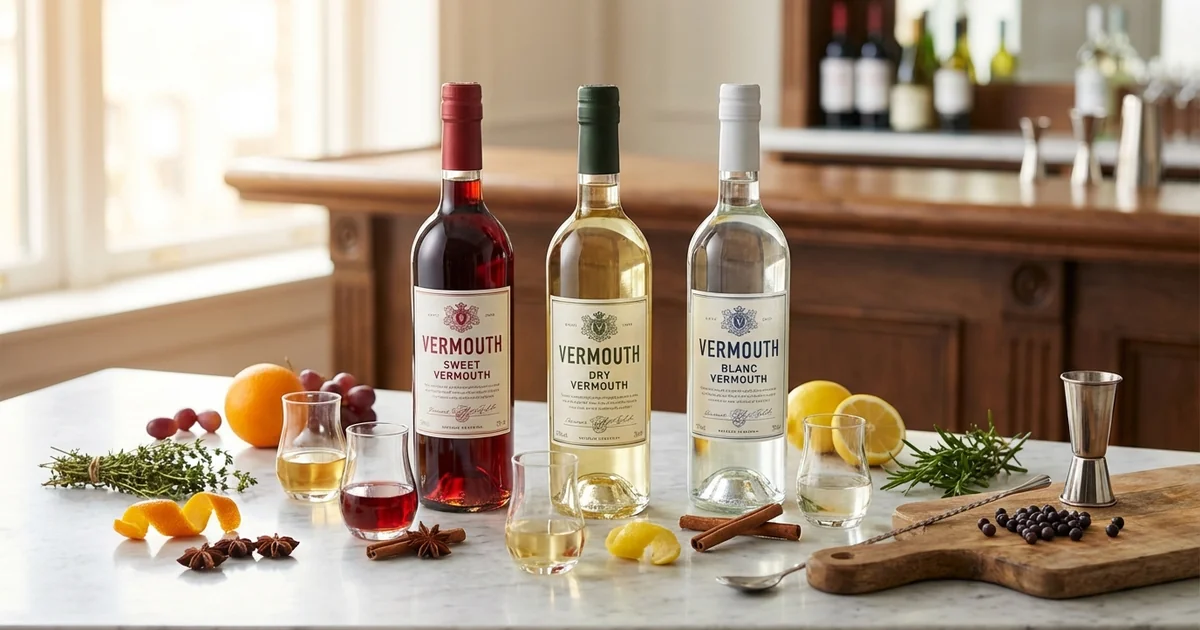
Understanding the three main vermouth categories helps you select the right bottle for your cocktails and drinking preferences.
Sweet Vermouth (Rosso)
Sweet or red vermouth originated in Turin, Italy, in the 18th century. Despite the name "red," it typically appears deep amber or reddish-brown due to caramelized sugar added during production. Sweet vermouth contains 10-15% sugar and features rich, spiced flavors with notes of vanilla, caramel, dried fruit, and warming baking spices.
Italian sweet vermouths tend toward bolder, more robust profiles with pronounced bitterness from botanicals like gentian and wormwood. This style provides the foundation for spirit-forward classics like the Manhattan, Boulevardier, and Negroni, where it balances whiskey's heat or gin's botanicals while adding layers of complexity.
Dry Vermouth
French producers pioneered dry vermouth in the early 19th century, creating a lighter, more delicate style. Dry vermouth contains significantly less sugar (under 4%) and maintains a pale straw or light gold color. The flavor profile emphasizes floral, herbal, and citrus notes rather than caramelized sweetness.
Classic dry vermouth from producers like Dolin or Noilly Prat offers subtle complexity with chamomile, elderflower, and white pepper characteristics. This style became synonymous with the Martini, where it adds botanical depth without overwhelming the gin. Dry vermouth also works beautifully in shaken drinks like the Bronx or Perfect Manhattan (which uses both sweet and dry vermouth).
Blanc or Bianco Vermouth
Blanc vermouth splits the difference between sweet and dry styles. Sometimes called bianco (Italian) or blanc (French), this category features a clear to pale golden appearance with moderate sweetness - more than dry vermouth but less cloying than sweet varieties.
The flavor profile leans toward vanilla, orange blossom, stone fruit, and gentle spice. Blanc vermouth's balanced nature makes it incredibly versatile for cocktails and particularly excellent for drinking on its own over ice. It works wonderfully in spritzes, lighter aperitif cocktails, and modern creations that call for a touch of sweetness without heavy caramel notes.
Essential Vermouth Cocktails
Each vermouth style has signature cocktails that showcase its unique characteristics.
Sweet Vermouth Cocktails:
- Manhattan: The definitive sweet vermouth cocktail, combining whiskey, sweet vermouth, and bitters in perfect harmony
- Negroni: Equal parts gin, sweet vermouth, and Campari create this bitter, complex Italian classic
- Boulevardier: A whiskey-based variation of the Negroni with deeper, richer flavors
- Americano: A low-ABV combination of sweet vermouth, Campari, and soda water
Dry Vermouth Cocktails:
- Dry Martini: Gin and dry vermouth in your preferred ratio, garnished with olives or a lemon twist
- Perfect Manhattan: Uses equal parts sweet and dry vermouth with whiskey
- Bronx: A forgotten classic combining gin, dry vermouth, sweet vermouth, and orange juice
- Reverse Martini: Flips the traditional ratio to make vermouth the star
Blanc Vermouth Cocktails:
- Vermouth Spritz: Blanc vermouth, soda water, and a citrus twist for a refreshing aperitif
- Bamboo: A sherry and blanc vermouth combination with bitters
- White Negroni: Substitutes blanc vermouth and Suze for a lighter, more floral variation
- Martinez: An early Martini ancestor using blanc or sweet vermouth with Old Tom gin
Top Vermouth Brands to Try
The vermouth renaissance has brought exceptional products to market. These brands consistently deliver quality worth seeking out.
Carpano Antica Formula stands as the gold standard for sweet vermouth. Rich, velvety, and intensely flavorful with pronounced vanilla and bitter orange notes, it transforms Manhattans and Negronis into something special. The depth comes at a price point higher than basic vermouths, but the quality justifies the cost.
Dolin produces exceptional French vermouths across all three styles. Their dry vermouth sets the benchmark for Martinis with delicate, precise botanical flavors. The blanc offers beautiful balance, while their sweet (rouge) provides a lighter, more elegant alternative to Italian styles.
Cocchi creates historically-inspired Italian vermouths with impressive complexity. Cocchi Vermouth di Torino (sweet) delivers classic Turinese character with assertive botanicals and balanced sweetness. Their Americano (blanc style) features notable gentian bitterness that works wonderfully in spritzes.
Martini & Rossi remains the most widely available vermouth globally. While not the most complex, their Rosso and Extra Dry provide reliable, affordable options for everyday mixing. The Riserva line offers significantly upgraded quality for cocktail enthusiasts.
Punt e Mes deserves special mention as a particularly bitter, intense sweet vermouth. The name means "point and a half" in Piedmontese, referring to its formula of one part sweet vermouth and half-part bitter. It creates robust Negronis and adds extra depth to stirred whiskey cocktails.
Storage: The Critical Detail Most People Ignore
Here's the truth most cocktail books don't emphasize enough: vermouth is wine, and wine oxidizes. That bottle of vermouth sitting in your cabinet for six months? It's likely lost most of its aromatic complexity and developed flat, stale flavors.
Refrigerate immediately after opening. The cool temperature dramatically slows oxidation, preserving the delicate botanical flavors that make quality vermouth worth buying. Store bottles upright to minimize the wine's contact with air in the bottle neck.
Use within 4-6 weeks for optimal quality. While refrigerated vermouth remains safe to drink longer, the flavor deteriorates noticeably after about a month. If you rarely make vermouth cocktails, buy smaller bottles (375ml instead of 750ml) to ensure freshness.
Consider vacuum preservation systems like Private Preserve or Vacu Vin for bottles you use infrequently. These tools remove oxygen from the bottle, extending shelf life to 8-12 weeks when combined with refrigeration.
Taste your vermouth before using it. If it smells like wine vinegar or tastes flat and one-dimensional compared to when you opened it, replace it. Using oxidized vermouth ruins otherwise good cocktails.
Drinking Vermouth Neat: The Aperitivo Tradition
While Americans primarily know vermouth as a cocktail modifier, Mediterranean culture has long embraced vermouth as a standalone aperitif. Drinking vermouth neat or "on the rocks" showcases the complexity that disappears when mixed with stronger spirits.
Pour 2-3 oz of vermouth over ice in a rocks glass or wine glass. Add a citrus twist (orange for sweet vermouth, lemon for dry or blanc) to highlight the botanical aromatics. The ritual stimulates the appetite before dinner while providing a lower-alcohol alternative to spirits.
For a longer drink, try a simple Vermouth and Soda: fill a wine glass with ice, add 3 oz vermouth, top with 2 oz soda water, and garnish with citrus and olives or berries depending on the style. This refreshing combination has become increasingly popular as drinkers seek flavorful, lower-ABV options.
Experimenting with different vermouths served this way helps you understand each bottle's character, making you a better cocktail maker when you incorporate them into mixed drinks.
Frequently Asked Questions
Does vermouth go bad?
Yes, vermouth oxidizes like wine after opening. Refrigerate opened bottles and use within 4-6 weeks for best quality. Unopened bottles stored properly can last several years.
What's the difference between sweet and dry vermouth?
Sweet vermouth contains 10-15% sugar, has a dark amber color, and features caramel and spice notes. Dry vermouth contains less than 4% sugar, appears pale gold, and emphasizes floral and herbal flavors.
Can I substitute sweet vermouth for dry vermouth?
Not in classic cocktails. Sweet and dry vermouths have completely different flavor profiles. Substituting one for the other fundamentally changes the drink's character - a Manhattan made with dry vermouth or a Martini with sweet vermouth won't taste right.
Why does my Martini taste different at home versus at a bar?
Often, the culprit is oxidized vermouth. Bars use vermouth quickly and refrigerate it, ensuring freshness. Home bottles sitting in cabinets for months lose their aromatic complexity, creating flat-tasting Martinis.
What cocktails use blanc vermouth?
Blanc vermouth works in spritzes, Bamboo cocktails, White Negronis, and as a sweet vermouth substitute in drinks where you want less caramel sweetness. It's also excellent served neat over ice.
How much vermouth should I use in a Martini?
Traditional ratios range from 1:1 (equal parts gin and vermouth) to 6:1 or drier. Start with 3:1 or 4:1 to taste the vermouth's contribution, then adjust to preference. Very dry Martinis use just a small splash or rinse of vermouth.
Vermouth deserves respect as a sophisticated ingredient that rewards attention to quality and freshness. Whether you're perfecting classic cocktails or exploring aperitivo culture, understanding vermouth types, choosing quality brands, and storing bottles properly elevates your entire cocktail experience. Start with one bottle each of quality sweet and dry vermouth, keep them refrigerated, and discover how this essential modifier transforms your home bar.
Tags:
Advertisement
About Elena
Classic Cocktails & Gin Expert at Hero Cocktails, passionate about crafting exceptional cocktails and sharing mixology expertise.
Advertisement