Seasonal Drinks
Mulled Wine Recipe & Guide: How to Make Glühwein
Master mulled wine with our complete guide to German Glühwein, Nordic glogg, wine selection, spice blends, and batch preparation techniques.
Advertisement
Mulled Wine: The Ultimate Guide to Europe's Beloved Winter Warmer
When winter's chill sets in and holiday festivities begin, few drinks offer the warmth and aromatic comfort of mulled wine. This spiced, heated red wine has graced European Christmas markets for centuries, filling the air with cinnamon, cloves, and citrus while warming hands and hearts. Whether you know it as German Glühwein, Scandinavian glogg, or simply mulled wine, mastering this classic winter drink transforms ordinary gatherings into memorable celebrations.
The beauty of mulled wine lies in its deceptive simplicity. At its core, it's just wine, spices, sweetener, and gentle heat. Yet the interplay between these elements—the wine's body, the spice balance, the citrus brightness, the careful temperature control—separates forgettable warm wine from the aromatic, soul-warming beverage that has sustained European winter traditions for millennia.
The Ancient Origins: From Roman Conditum to Christmas Markets
The history of mulled wine stretches back over 2,000 years to ancient Rome, where conditum paradoxum—spiced wine sweetened with honey—was consumed for both pleasure and purported medicinal benefits. Romans believed the spices preserved the wine and provided warming properties during cold months. As the Roman Empire expanded across Europe, this tradition spread and evolved into distinct regional variations.
Medieval Evolution and the Spice Trade
During the Middle Ages, mulled wine became increasingly sophisticated as the spice trade brought exotic ingredients like cinnamon, cloves, and star anise from Asia to European markets. The drink was called hippocras in England and France, named after Hippocrates, the Greek physician. Medieval recipes often included ginger, cardamom, and even grains of paradise—a rare West African spice that added peppery complexity.
These spiced wines served multiple purposes in medieval life: they masked the flavor of wine that was turning to vinegar, they were believed to cure various ailments, and they provided warmth during brutal winters in drafty castles and homes. The wealthy demonstrated status through elaborate spice combinations, while common folk used whatever warming spices they could afford.
German Glühwein: The Christmas Market Icon
Modern mulled wine culture centers on Germany, where Glühwein (literally "glow wine") has become synonymous with Christmas markets since the 16th century. The tradition of Weihnachtsmarkt—Christmas markets—spread across German-speaking regions, with each city developing its signature Glühwein recipe.
Dresden claims the first documented Glühwein Christmas market in 1498, where spiced wine was served in ceramic mugs to cold market-goers. Today, German Christmas markets serve millions of cups each season, with strict regulations governing what can be called Glühwein: it must contain at least 7% alcohol by volume, be made from wine (not other fermented drinks), and be heated without boiling.
Regional German variations:
- Feuerzangenbowle: A dramatic preparation where rum-soaked sugar loaf is set aflame and drips into the mulled wine below
- White Glühwein: Made with white or rosé wine, popular in Austria and southern Germany
- Kinderglühwein: Non-alcoholic version made with grape juice for children
Nordic Glogg: The Stronger Scandinavian Cousin
In Scandinavia, glogg (Swedish and Norwegian) or glögg (Danish) takes mulled wine to a more robust level. Dating back to the 1600s, Nordic versions traditionally add stronger spirits like vodka, aquavit, or rum to the base wine, creating a more potent winter warmer.
Classic Swedish glogg includes distinctive elements that set it apart:
- Addition of raisins and blanched almonds served in each cup
- Fortification with vodka or aquavit (40-50% ABV spirits)
- Stronger spice profile with heavier cardamom presence
- Longer steeping time for deeper spice integration
The tradition of glogg parties (glöggfest) in December sees friends gathering to prepare large batches together, often making it days in advance to allow flavors to marry. Many Swedish families have jealously guarded recipes passed down through generations.
The Classic Mulled Wine Recipe
This is the foundational mulled wine recipe that works beautifully for any occasion. It's based on traditional German Glühwein but refined for home preparation and modern ingredients. This makes 8 servings and can be easily multiplied for larger gatherings.
Ingredients
Base:
- 1 bottle (750ml) medium-bodied red wine
- 2 cups (480ml) apple juice or apple cider
- 1/4 cup (60ml) brandy or cognac (optional but traditional)
Sweetener:
- 1/4 cup (50g) brown sugar or honey
- 2 tablespoons (30ml) maple syrup (optional for depth)
Spices:
- 2 cinnamon sticks
- 4 whole star anise
- 6 whole cloves
- 4 green cardamom pods (lightly crushed)
- 1 teaspoon whole black peppercorns
Citrus:
- 1 large orange, sliced into wheels
- 1 lemon, sliced into wheels
- 2-3 strips of orange peel (removed with vegetable peeler)
Instructions
-
Combine base ingredients: In a large pot or Dutch oven, combine the red wine, apple juice, and brandy (if using). Add the brown sugar and maple syrup, stirring to dissolve.
-
Add spices and citrus: Add all the whole spices, citrus slices, and orange peel to the pot. Give everything a gentle stir to distribute.
-
Heat gently - this is critical: Place the pot over medium-low heat. Bring the mixture to a gentle simmer—you should see very small bubbles forming around the edges, but never a rolling boil. This should take 8-10 minutes. Temperature should reach 150-170°F (65-75°C).
-
Steep and infuse: Once the wine reaches temperature, reduce heat to low and let it steep for at least 30 minutes. The longer it steeps (up to 2 hours), the more pronounced the spice flavors become. Stir occasionally.
-
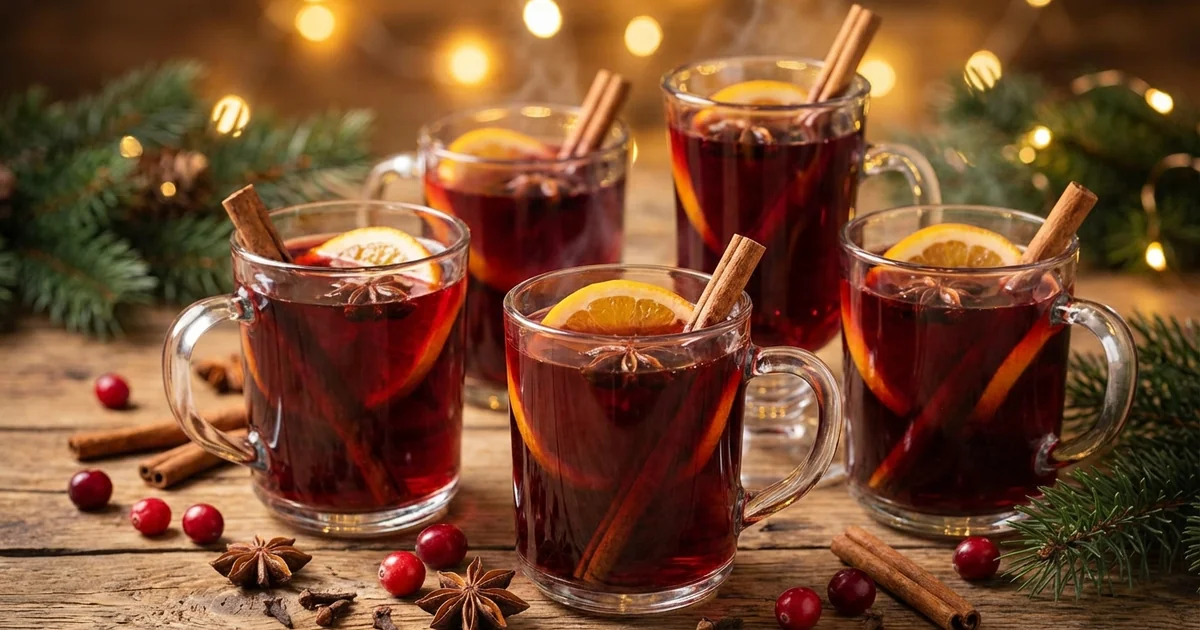
Strain and serve: Using a fine-mesh strainer or slotted spoon, remove the spices and citrus pieces. Ladle the mulled wine into heat-proof mugs or glasses. Garnish each serving with a fresh orange slice and cinnamon stick if desired.
-
Keep warm: If serving over an extended period, transfer to a slow cooker set to "warm" setting, or return to very low heat on the stove. Check temperature occasionally—it should stay warm but not continue cooking.
Choosing the Right Wine: Varietals and Price Points
The most common mistake in making mulled wine is choosing the wrong base wine. Understanding how heat affects wine helps you make smart selections that maximize flavor while respecting your budget.
The Heat Factor: Why Expensive Wine Is Wasted
When you heat wine above 140°F (60°C), several chemical changes occur that fundamentally alter its character:
- Delicate aromatic compounds evaporate quickly
- Subtle tannin structures break down
- Nuanced terroir characteristics disappear
- Alcohol begins to evaporate (though slowly)
This means that complex, expensive wines lose the very characteristics you're paying for. That $40 Burgundy with elegant notes of forest floor and delicate fruit? Heat turns it into generic warm red wine. Save your premium bottles for sipping and use affordable, fruit-forward wines for mulling.
Best Red Wine Varietals for Mulled Wine
Merlot: The top choice for most mulled wine recipes. Its soft tannins, medium body, and plum-cherry fruit profile create a smooth base that accepts spices beautifully. Merlot's natural slight sweetness means you can use less added sugar.
Cabernet Sauvignon: Works well if you prefer bolder flavor and don't mind slightly more prominent tannins. Choose New World Cabernet (California, Chile, Australia) over Old World versions for riper fruit and less austerity.
Garnacha/Grenache: Particularly popular in Spanish mulled wine recipes. Its bright red fruit, moderate tannins, and often higher alcohol content (which survives heating better) make it excellent for spiced wine.
Zinfandel: California Zinfandel's jammy fruit and slight spiciness complement warming spices perfectly. Its fuller body stands up well to longer steeping times.
Tempranillo: Spain's signature grape brings earthy notes and cherry fruit that pairs beautifully with cinnamon and orange. More complex than Merlot without being expensive.
Blends: Many affordable red blends (often labeled as "Red Wine" or "Table Wine") work wonderfully. Look for fruit-forward descriptions rather than "earthy" or "tannic."
What to Avoid
Pinot Noir: Too delicate and light-bodied. The heating process overwhelms its subtle characteristics, and you're left with thin, flat mulled wine.
Chianti and Sangiovese: High acidity and prominent tannins become harsh when heated. The spices can't overcome Sangiovese's natural astringency.
Heavy Bordeaux blends: Expensive and often too tannic. The structure that makes them age-worthy becomes bitter and unpleasant when heated.
Wine with oak aging: Strong oak flavors intensify and can become overwhelming, creating a woody, unbalanced mulled wine.
The Sweet Spot: $8-15 Per Bottle
For mulled wine recipe purposes, aim for wines in the $8-15 range. This price point typically offers:
- Decent fruit character without off-flavors
- Adequate body to support spices
- Enough quality to taste pleasant, not so much you're wasting money
Popular value bottles that work excellently:
- Apothic Red (California blend)
- Barefoot Merlot
- Yellow Tail Cabernet Sauvignon
- Gato Negro Cabernet (Chile)
- La Vuelta Tempranillo (Spain)
- Bogle Essential Red
The Perfect Spice Blend: Building Aromatic Complexity
The spice combination defines mulled wine's character, distinguishing a well-crafted version from mere warm wine. Understanding each spice's contribution helps you balance flavors and create your signature blend.
Essential Spices: The Core Four
Cinnamon Sticks (Not Ground Cinnamon): The backbone of any mulled wine. Cinnamon provides sweet warmth without overwhelming heat. Use whole sticks rather than ground cinnamon, which creates murky texture and sediment. Ceylon cinnamon (true cinnamon) is more delicate and sweet, while Cassia cinnamon (most common in stores) is bolder and spicier. Either works, but don't mix them.
Measurement: 2 cinnamon sticks per bottle of wine
Star Anise: These beautiful star-shaped pods add licorice-like sweetness and subtle complexity. Their aromatics are powerful—too much creates medicinal flavors, but the right amount adds mysterious depth. Always use whole star anise and remove them before serving.
Measurement: 3-4 whole stars per bottle of wine
Whole Cloves: Provide pungent, warming spice with slightly bitter undertones that balance sweetness. Cloves are extremely potent—a little goes far. Too many create overwhelming, almost numbing flavors. Always count your cloves and remove them after steeping.
Measurement: 4-6 whole cloves per bottle of wine
Cardamom Pods: Less common in Western recipes but traditional in Nordic glogg, cardamom adds citrusy, floral notes with gentle spice. Lightly crush the pods with the side of a knife to release aromatic oils without letting the seeds escape entirely.
Measurement: 3-4 pods per bottle of wine (optional but highly recommended)
Supporting Spices: Optional Enhancements
Black Peppercorns: 4-6 whole peppercorns add subtle heat and complexity without creating "spicy" wine. They enhance the warming effect and add depth.
Nutmeg: One small piece (about 1/4 of a whole nutmeg, lightly crushed) or 1/8 teaspoon grated. Adds sweet, nutty warmth. Don't overdo it—nutmeg can quickly dominate.
Ginger: A 1-inch piece of fresh ginger (sliced) or 3-4 slices of dried ginger root add zingy heat and brightness. Particularly good if you're using sweeter wines or want more pronounced warming effect.
Allspice Berries: 3-4 whole berries provide a flavor reminiscent of cinnamon, nutmeg, and cloves combined—like concentrated autumn spice.
Vanilla: A 2-inch piece of vanilla bean (split lengthwise) adds creamy sweetness and rounds out sharper spices. This is a luxurious addition for special occasions.
Citrus Elements: Brightness and Balance
Fresh citrus isn't technically a spice, but it's essential for balanced mulled wine. The citrus serves multiple purposes: cutting sweetness, adding brightness, contributing essential oils from the peel, and providing visual appeal.
Orange: The primary citrus in most recipes. Use the whole fruit: slice it into wheels and add them to the pot, plus add some peel strips (avoiding the bitter white pith). Orange's sweet, familiar flavor complements red wine beautifully.
Lemon: Adds sharper acidity and helps balance very sweet mulled wine. Use half the amount of lemon as orange. Some recipes omit lemon entirely, others use equal amounts—it's personal preference.
Peel vs. Juice: Use the peel and sliced fruit, but never add pure citrus juice to mulled wine. The peel contains aromatic oils that infuse flavor, while juice can make the wine too acidic and thin.
Creating Your Custom Blend
Once you've made the classic recipe, experiment with custom blends:
German-Style Glühwein: Heavy on cinnamon and cloves, minimal cardamom, orange-focused citrus
Swedish Glogg: Prominent cardamom, less cinnamon, add raisins and blanched almonds to each serving
Spiced Apple Variation: Increase apple cider ratio, add fresh ginger and allspice, reduce star anise
Festive Orange Mulled Wine: Double the orange (peel and slices), add vanilla bean, lighter on cloves
Sweeteners: Finding the Right Balance
The sweetening element in mulled wine serves more than just making it sweet—it balances the wine's tannins, complements the spices, and creates smooth, rounded flavor. However, over-sweetening is the second most common mulled wine mistake (after boiling).
Sweetener Options and Their Characteristics
Brown Sugar: The most traditional choice. Its molasses notes add caramel flavor that complements cinnamon and star anise beautifully. Light brown sugar is more subtle, dark brown sugar is more robust. Start with 1/4 cup per bottle and adjust.
Honey: Creates rounder, more complex sweetness with floral notes. Honey's viscosity also adds body to the final drink. Use about 3 tablespoons per bottle—remember that honey is sweeter than sugar gram for gram. Choose mild honey (clover, acacia) rather than strongly flavored varieties that can clash with wine.
Maple Syrup: Adds distinctive maple flavor and silky texture. Works beautifully in recipes with apple cider and warm spices. Use pure maple syrup (not pancake syrup), about 2-3 tablespoons per bottle.
White Sugar: Functional but flat. It sweetens without adding any flavor dimension. Use only if you specifically want clean sweetness without molasses or honey notes.
Demerara or Turbinado Sugar: Coarse, minimally processed sugars with subtle caramel notes. These dissolve more slowly, so add early in the heating process and stir well.
Adjusting Sweetness for Wine Type
Your base wine's natural sweetness should guide sugar additions:
Dry red wine (Cabernet, Tempranillo): Needs more sweetener, 1/4 to 1/3 cup brown sugar or equivalent
Fruit-forward wine (Merlot, Zinfandel): Needs less sweetener, start with 3 tablespoons and taste
Off-dry or sweet wine: Be very cautious—you might need only 1-2 tablespoons or none at all
Always taste before adding citrus and spices, as they affect perceived sweetness. Then taste again after 20 minutes of steeping and adjust. Remember: you can always add more sweetener, but you can't remove it.
The Apple Juice Factor
Most mulled wine recipes include apple juice or apple cider (unfiltered apple juice), which serves multiple purposes:
- Adds natural fruit sweetness, reducing need for added sugar
- Contributes body and mouthfeel
- Dilutes the wine slightly, reducing alcohol intensity and making it more sessionable
- Brings apple-pie flavors that complement warm spices
If your recipe includes apple juice, reduce added sweeteners by about one-third compared to wine-only versions. The apple juice typically contains 24-28g of sugar per cup, so 2 cups adds significant sweetness.
The Critical Don't: Why You Must Never Boil Mulled Wine
The single most important technical rule for making mulled wine is this: never let it boil. This isn't a suggestion or a minor detail—it's the difference between excellent mulled wine and a disappointing, bitter, thin disaster.
What Happens When Mulled Wine Boils
Alcohol evaporation: Alcohol (ethanol) boils at 173°F (78°C), well below water's boiling point of 212°F (100°C). When mulled wine reaches a rolling boil, you're rapidly evaporating the alcohol—the very thing that provides warmth, body, and preserves the wine's character. A batch that boils for 10 minutes can lose 25-50% of its alcohol content.
Bitter flavor development: The tannins and polyphenols in red wine break down at high temperatures, creating bitter, astringent flavors. Spices also release bitter compounds when subjected to boiling. The result tastes harsh and unpleasant rather than smooth and warming.
Loss of aromatic compounds: The delicate aromatic compounds that give wine its bouquet evaporate rapidly at boiling temperatures. You're left with flat, one-dimensional liquid that smells more of cooked fruit than the complex spice-wine harmony you want.
Spice extraction problems: Boiling extracts bitter, harsh elements from spices rather than their pleasant aromatic oils. Cloves especially become medicinal and unpleasant when boiled.
The Ideal Temperature Range
Keep your mulled wine between 150-170°F (65-75°C). At this range:
- Spices infuse their aromatic oils effectively
- Alcohol remains intact (only minimal evaporation)
- Wine tannins stay smooth and pleasant
- Aromatic compounds remain in the liquid
- The drink is hot enough to be warming but not harsh
How to monitor temperature:
- Use an instant-read thermometer to check periodically
- Look for small bubbles forming around the edges of the pot, not throughout the liquid
- You should see gentle steaming, never rolling boil
- The surface should barely move, not bubble vigorously
Heat Management Techniques
Starting temperature: Heat over medium-low heat rather than high heat. This gives you control and prevents overshooting the target temperature.
Visual cues: When tiny bubbles begin forming around the pot's edges and a few bubbles rise from the bottom, you're at the right temperature. Reduce heat immediately.
Maintaining warmth: Once you reach temperature, reduce heat to low. Some stoves require the lowest setting; others might need slightly higher. Learn your equipment.
For serving: A slow cooker set to "warm" maintains perfect temperature (usually 165-185°F depending on model). Transfer your prepared mulled wine to the slow cooker for parties.
Batch Preparation for Holiday Parties
One of the greatest advantages of mulled wine is its scalability. Unlike cocktails that require individual preparation, mulled wine works beautifully for crowds. Here's how to prepare batches for 10-50 guests without stress.
Calculating Quantities
Standard serving size for mulled wine is 6-8 oz per glass (smaller than regular wine pours since it's rich and warming). Plan for:
3-hour party: 2-3 servings per guest 4+ hour party: 3-4 servings per guest Holiday dinner party: 1-2 servings per guest (usually other drinks are available)
Example for 20 guests, 3-hour party:
- 20 guests × 2.5 servings = 50 servings needed
- 50 servings × 7 oz = 350 oz total
- 350 oz = approximately 10 bottles of wine (plus apple juice/cider)
Scaling the Recipe
The basic recipe scales linearly, but very large batches require slight adjustments:
For 3 bottles (serves 24):
- Multiply all ingredients by 3
- Heating time increases to 15-20 minutes to reach temperature
- Steeping time remains 30-60 minutes
For 6+ bottles (serves 48+):
- Multiply ingredients by 6
- Use a very large stockpot (at least 12 quarts)
- Consider making 2 separate batches rather than one enormous batch for easier temperature control
- May need to increase spices by only 5× instead of 6× (they extract more efficiently in larger volumes)
Make-Ahead Strategy
3-5 days before:
- Purchase wine and non-perishable ingredients
- Prepare spice sachets if using (see below)
1 day before:
- Buy fresh citrus
- Measure out all ingredients
- Test your serving equipment (slow cooker, ladle, mugs)
4 hours before party:
- Prepare mulled wine completely, allowing full steeping time
- Strain out all spices and fruit
- Transfer to slow cooker on warm setting or keep on very low stove heat
1 hour before guests arrive:
- Verify temperature is 155-165°F
- Set out mugs, ladle, garnishes (orange slices, cinnamon sticks)
- Place "mulled wine station" where guests can self-serve if desired
During party:
- Check temperature every 30-45 minutes
- Keep lid on slow cooker between servings to maintain heat
- Refresh garnishes as needed
Spice Sachets for Easy Straining
For large batches, creating spice sachets makes straining effortless:
- Cut a square of cheesecloth (about 8 inches square)
- Place all whole spices in the center
- Gather edges and tie with kitchen twine
- Drop the sachet into the wine while heating
- Remove the entire sachet before serving—no straining needed
This works especially well for slow cooker preparation where you want to leave the wine warming for hours without over-spicing.
Keeping Mulled Wine Warm
Slow cooker method: The best option for parties. Set to "warm" setting (usually 165°F). Can hold mulled wine for 4-6 hours without degradation. Keep lid on between servings.
Stovetop method: Works for active serving periods. Keep on lowest heat setting. Stir occasionally and monitor temperature. Better for 2-hour windows than all-day serving.
Thermal carafe method: For smaller batches (1-2 bottles), a large thermal coffee carafe maintains temperature for 2-3 hours without additional heat. Not ideal for parties but great for intimate gatherings.
What doesn't work: Regular slow cooker "low" setting (usually 190-200°F—too hot), keeping in an Instant Pot on "warm" (temperature varies too much), or reheating repeatedly (degrades quality each time).
Regional Variations: Mulled Wine Around Europe
While the basics remain consistent, different European countries have developed distinctive mulled wine traditions worth exploring.
German Glühwein: The Christmas Market Classic
Traditional preparation: Pure red wine with cinnamon sticks, cloves, star anise, and orange. Minimal added sweetener (Germans prefer it less sweet than American versions). Often includes a shot of rum added to each mug at service.
Serving tradition: Served in ceramic mugs at Christmas markets. Many markets sell commemorative mugs each year that customers keep as souvenirs.
Feuerzangenbowle variation: A dramatic presentation where a rum-soaked sugar cone is suspended above the mulled wine and set aflame, dripping caramelized sugar into the wine below. The name means "fire tongs punch" and requires special equipment.
Swedish Glogg: The Spiked Version
Distinctive elements:
- Fortified with vodka or aquavit (1 part spirit to 3 parts wine)
- Heavy cardamom presence (more than German versions)
- Raisins and blanched almonds added to each serving
- Often made days ahead and reheated
Serving tradition: Served in small cups (3-4 oz) due to higher alcohol content. Each serving gets a spoonful of plumped raisins and almonds in the bottom.
Holiday custom: Making glogg is a social event. Friends gather for glögg parties where they prepare large batches together while sampling throughout.
British Mulled Wine: The Wassail Connection
Historical variation: Britain's wassail tradition (from Old English "waes hael" meaning "be well") created hearty mulled wine with roasted apples, ale, and eggs.
Modern British mulled wine: Simpler than wassail but often includes:
- More ginger than Continental versions
- Apple cider instead of or in addition to apple juice
- Demerara sugar for caramel notes
- Port wine fortification (1/2 cup port added at the end)
French Vin Chaud: The Wine Country Approach
Character: More subtle and wine-focused than German versions. The French want to taste the wine even when heated and spiced.
Typical preparation:
- Less sweetener (1-2 tablespoons per bottle)
- Fewer spices (typically just cinnamon and cloves)
- More citrus (both orange and lemon)
- Higher quality base wine (French use $12-18 wines rather than bottom shelf)
Regional variations: In Alsace, vin chaud often includes local white wine instead of red—a delicate, aromatic variation.
Austrian Glühmost: The Non-Alcoholic Version
What makes it different: Made with unfermented apple must (fresh-pressed apple juice) instead of wine, creating a non-alcoholic mulled drink.
Preparation: Same spices as Glühwein, but the apple base creates entirely different flavor profile—less complex but more approachable for children and non-drinkers.
Serving Mulled Wine at Holiday Parties
Presentation and serving style can elevate mulled wine from simple warm beverage to centerpiece of your holiday gathering.
Glassware and Serving Vessels
Heat-resistant glass mugs: The traditional choice. They showcase the wine's deep red color and allow guests to hold them by the handle while the liquid stays hot.
Ceramic mugs: Excellent heat retention and comfortable to hold. Christmas-themed mugs add festive flair.
Tempered glass cups: Similar to Irish coffee glasses but larger (8-10 oz). These look elegant and show off garnishes.
What to avoid: Regular wine glasses (too hot to hold and thin glass can crack), plastic cups (impart flavor and don't handle heat well), unglazed ceramic (can absorb wine and become stained).
Garnish Presentation
Simple garnishes elevate the visual appeal:
Orange slice: Float a fresh orange wheel in each serving. Cut thick slices (1/4 inch) that won't fall apart.
Cinnamon stick: Place in the mug as both garnish and stirrer. It continues to infuse while guests drink.
Star anise: One whole star anise floating on top looks beautiful and adds aroma. Remove before drinking as they're not pleasant to bite into.
Sugared cranberries: Thread fresh cranberries on cocktail picks. The tart cranberries complement sweet mulled wine.
Dehydrated citrus wheels: Made ahead, these don't get soggy and look impressively professional.
Self-Service Station Setup
For larger parties, create a mulled wine bar where guests help themselves:
Station components:
- Slow cooker or large pot of mulled wine (keep lid on when not serving)
- Stack of heat-resistant mugs or cups
- Ladle for serving
- Small bowls of garnishes (orange slices, cinnamon sticks)
- Small tongs or spoons for garnishes
- Napkins
- Small card with serving suggestions
Signage example: "Mulled Wine - Ladle into mug, add orange slice and cinnamon stick, enjoy! Contains alcohol."
This setup allows you to host without constantly serving drinks, while ensuring consistent presentation.
Pairing Mulled Wine with Food
Mulled wine pairs beautifully with holiday foods:
Sweet pairings:
- Gingerbread cookies (spices echo each other)
- Stollen or panettone (traditional German/Italian Christmas breads)
- Shortbread cookies (buttery richness contrasts spice)
- Dark chocolate (especially with orange or cinnamon)
Savory pairings:
- Aged cheeses (Gouda, aged cheddar, Gruyère)
- Roasted nuts (especially almonds and walnuts)
- Charcuterie (particularly spiced sausages)
- Roasted chestnuts
What to avoid: Very delicate flavors get overwhelmed by mulled wine's intensity. Skip raw oysters, light fish, and subtle cheeses.
Questions
Frequently Asked
Advertisement
Advertisement