Cocktail History
Vesper Martini: James Bond's Iconic Cocktail Recipe
Learn how to make the iconic Vesper Martini from Casino Royale. Master Ian Fleming's 1953 recipe with gin, vodka & Lillet, plus modern substitutions.

Advertisement
Vesper Martini Recipe: James Bond's Legendary Cocktail
The Vesper Martini stands as one of the most iconic cocktails in literary and cinematic history. Created by author Ian Fleming for his debut James Bond novel Casino Royale in 1953, this gin and vodka martini represents far more than just a drink—it's a symbol of sophistication, danger, and heartbreak that has captivated cocktail enthusiasts for over seven decades.
In this comprehensive guide, we'll explore everything about the Vesper Martini—from Fleming's original specifications to the complexities of ingredient sourcing and the enduring shaken-versus-stirred debate. Whether you're a devoted James Bond fan or a cocktail enthusiast looking to master classic drinks, this deep dive will help you craft the perfect Vesper.
The Literary Origins: Casino Royale 1953
Unlike most classic cocktails whose origins are disputed or lost to history, the Vesper Martini has a precise birth certificate. In Chapter 7 of Casino Royale, James Bond provides explicit instructions to a bartender at the Casino Royale in France:
"Three measures of Gordon's, one of vodka, half a measure of Kina Lillet. Shake it very well until it's ice-cold, then add a large thin slice of lemon peel. Got it?"
This wasn't just any drink order—it was Ian Fleming writing himself into cocktail history. Bond even insists the drink be served in a "deep champagne goblet" rather than the traditional martini glass, emphasizing the drink's generous proportions.
Why Fleming Created the Vesper
Ian Fleming was known for his attention to detail and personal experiences influencing his writing. The Vesper Martini likely drew from Fleming's own cocktail preferences during his time working in Naval Intelligence during World War II. The combination of gin and vodka was unconventional for the 1950s, when the classic martini reigned supreme as a gin-only affair.
The drink's name carries profound significance: Vesper Lynd was Bond's love interest in the novel, a double agent whose betrayal and subsequent death leaves Bond emotionally scarred. By naming his signature cocktail after her, Fleming created a bittersweet memorial—every time Bond orders a Vesper, he's reminded of his greatest romantic loss.
The Classic Vesper Martini Recipe
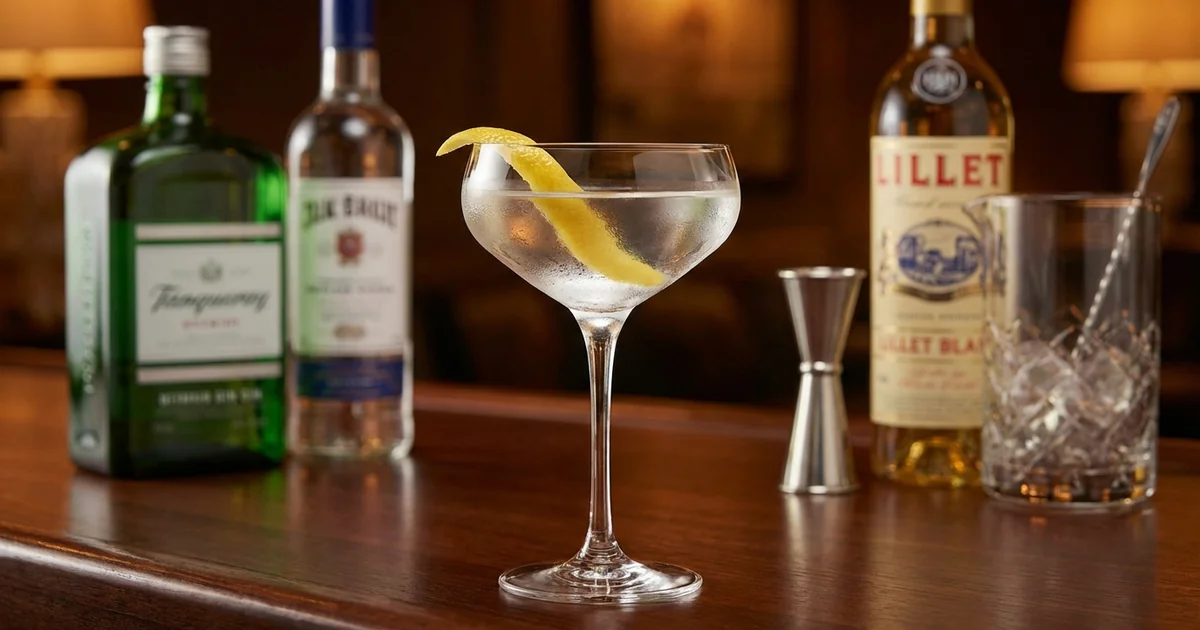
Fleming's original specifications translate to modern measurements as follows. This classic Vesper Martini recipe stays true to Bond's original instructions.
Ingredients
- 3 oz (90ml) Gordon's Gin
- 1 oz (30ml) vodka (preferably grain-based)
- 0.5 oz (15ml) Lillet Blanc (see note about Kina Lillet below)
- Large thin lemon peel for garnish
- Ice cubes
Instructions
-
Chill your glass: Place a coupe glass or deep champagne goblet in the freezer for at least 15 minutes.
-
Combine spirits: Add gin, vodka, and Lillet Blanc to a cocktail shaker filled with ice.
-
Shake vigorously: Despite traditional martini wisdom, shake hard for 15-20 seconds until the shaker becomes extremely cold and frosty. This is crucial to Bond's specification.
-
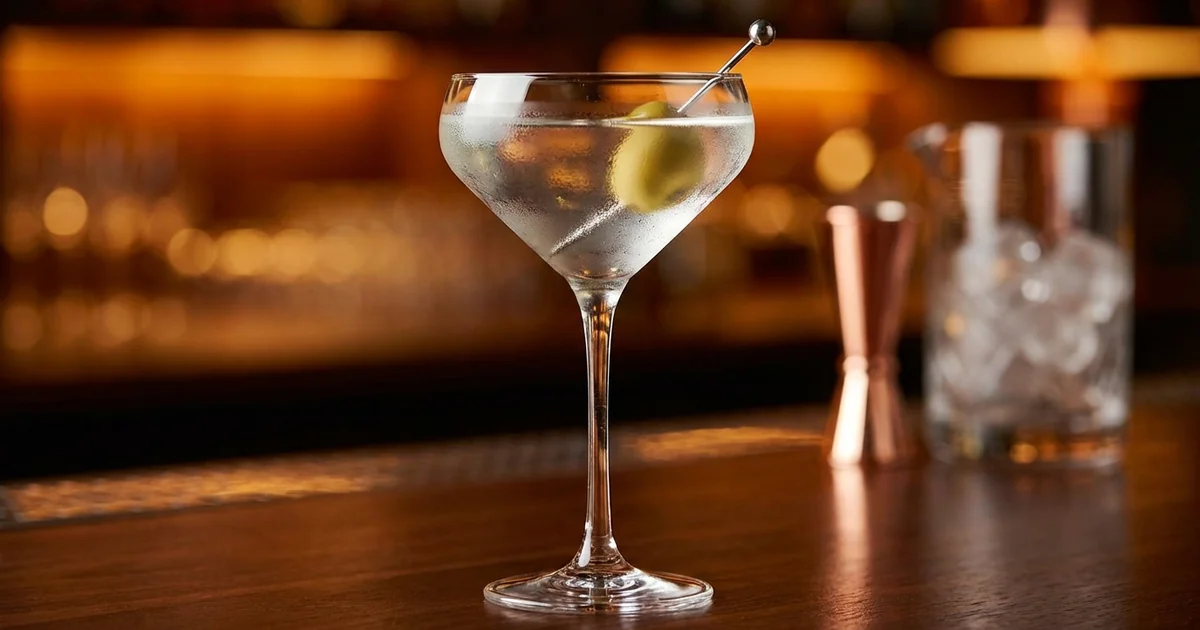
Strain and serve: Strain into your chilled glass. The drink should be crystal clear and extremely cold.
-
Express lemon oils: Cut a large, thin strip of lemon peel. Twist it over the drink to release the oils, then drop it into the glass.
The Kina Lillet Problem: Then vs Now
Here's where making an authentic Vesper becomes complicated: the Kina Lillet that Fleming specified in 1953 no longer exists. Understanding this change is crucial for anyone attempting the Vesper cocktail today.
What Was Kina Lillet?
Kina Lillet was a French aperitif wine produced by the Lillet company since 1887. The "Kina" referred to quinine derived from cinchona bark, which gave the drink a distinctive bitter edge. This original formula was:
- More bitter than modern Lillet
- Higher in quinine content
- More robust and assertive in flavor
- Better equipped to stand up to the strong gin and vodka base
The 1986 Reformulation
In 1986, Lillet reformulated their recipe, removing much of the quinine and creating what we now know as Lillet Blanc. While still delicious, it's significantly sweeter and less bitter than the original Kina Lillet. Using modern Lillet Blanc in a Vesper creates a notably different cocktail than what Fleming and Bond would have experienced.
Modern Substitutions
Bartenders have developed several approaches to recreate the original flavor profile:
Option 1: Cocchi Americano The most popular substitute, Cocchi Americano is an Italian aperitif that closely resembles the original Kina Lillet profile with its pronounced quinine bitterness.
Option 2: Lillet Blanc + Bitters Use Lillet Blanc but add 1-2 dashes of Angostura or orange bitters to compensate for the missing quinine bitterness.
Option 3: Reserve Versions Some specialty liquor stores carry special "reserve" or vintage-style versions of quinquina (quinine wine) that approximate the original formula.
Shaken, Not Stirred: The Controversy Explained
Bond's insistence on shaking his martinis became one of cinema's most famous catchphrases, but it flies in the face of traditional martini preparation. Let's explore why this matters for the Vesper Martini recipe.
Why Traditionalists Stir
Classic martini technique calls for stirring because:
- Preserves the clarity of the spirits
- Creates a silky, smooth texture
- Provides gentler dilution
- Maintains the integrity of delicate gin botanicals
- Results in an elegant, crystal-clear presentation
Why Bond Shook
Fleming's choice to have Bond shake the Vesper was deliberate and served multiple purposes:
1. Texture: Shaking creates tiny ice chips that remain suspended in the drink, creating a slightly cloudy, almost crystalline appearance and a sharper, more aggressive mouthfeel.
2. Temperature: Vigorous shaking achieves a colder temperature faster than stirring—crucial when you want a drink "ice-cold" as Bond specified.
3. Dilution: The Vesper is an exceptionally strong drink (around 30% ABV). Shaking provides more dilution than stirring, making it slightly more approachable while still maintaining its potency.
4. Character Development: Bond's preference for shaking rather than the refined stirring technique suggested a man of action over tradition—someone who breaks rules and does things his own way.
Why Modern Bartenders Often Stir the Vesper
Interestingly, many contemporary bartenders have moved away from Bond's shaking instruction when making Vespers. Here's why:
The Evolution of Technique
Today's craft cocktail movement emphasizes precision and technique. Most bartenders argue that stirring produces a superior martini-style drink because:
- Spirit Quality: Modern premium gins have complex botanical profiles that shaking can "bruise" or obscure
- Aesthetic: The cloudiness from shaking is considered less elegant
- Control: Stirring provides more precise control over dilution
- Tradition: Respecting classic cocktail methodology
When to Shake, When to Stir
Consider shaking your Vesper if:
- You want the coldest possible drink quickly
- You prefer a more aggressive, sharp texture
- You're making it as a tribute to Bond and want authenticity
- You enjoy the slight textural variation from ice crystals
Consider stirring your Vesper if:
- You want to highlight the gin's botanicals
- You prefer a silkier, smoother mouthfeel
- You want crystal clarity
- You appreciate refined technique
Large Format Serving: The Deep Champagne Goblet
Fleming's specification of a "deep champagne goblet" is often overlooked but significant. This wasn't the shallow coupe we associate with champagne today, but rather a larger, tulip-shaped glass that could accommodate the Vesper's generous 4.5 oz pour.
Glassware Options
Deep Champagne Goblet (Original):
- 6-8 oz capacity
- Tulip or flute shape
- Allows the large format to shine
- Authentic to Fleming's vision
Coupe Glass (Modern Classic):
- 5-6 oz capacity
- Wide rim showcases the lemon oils
- Elegant presentation
- Most common in modern bars
Nick and Nora Glass (Contemporary):
- 5 oz capacity
- Smaller, more refined proportions
- Better for a slightly reduced recipe
- Popular in craft cocktail bars
- Prep Time
- 3min
- Difficulty
- Easy
- Glassware
- Coupe or Champagne Goblet
- ABV
- Approx 30%
Modern Adaptations and Variations
While purists stick to Fleming's original formula, modern bartenders have created interesting variations on the Vesper Martini recipe. These adaptations often apply techniques similar to those found in other classic cocktail variations, offering creative twists while maintaining the spirit of the original.
The Improved Vesper
This version accounts for the Kina Lillet issue:
- 2.5 oz gin
- 0.75 oz vodka
- 0.5 oz Cocchi Americano
- 2 dashes orange bitters
- Lemon twist
The reduced proportions make it closer to a standard cocktail size while the Cocchi Americano restores the original bitter profile.
The Reverse Vesper
For vodka lovers:
- 3 oz vodka
- 1 oz gin
- 0.5 oz Lillet Blanc
- Lemon twist
The 50/50 Vesper
A more balanced approach:
- 2 oz gin
- 2 oz vodka
- 0.75 oz Cocchi Americano
- Lemon twist
The Vesper Royale
A celebratory variation:
- Standard Vesper recipe
- Top with 1 oz champagne
- Orange twist instead of lemon
Choosing Your Spirits
The quality and character of your spirits dramatically affect the final Vesper. Here's what to consider:
Gin Selection
Gordon's Gin (Original) Fleming specifically mentioned Gordon's, which in the 1950s was a much higher proof (47.3% ABV) than today's version (37.5% ABV). If you want authenticity, look for Gordon's Export Strength at 47.3% ABV or choose another high-proof London Dry gin. For more insight into gin's role in classic cocktails, explore our complete gin cocktails guide.
Modern Alternatives:
- Tanqueray: Classic London Dry profile, widely available
- Beefeater: Traditional botanical blend, great value
- Plymouth Gin: Slightly earthier, softer style
- Ford's Gin: Created specifically for martinis
Vodka Selection
Fleming didn't specify a vodka brand, but grain-based vodkas work best:
- Belvedere: Polish rye vodka, smooth and clean
- Chopin: Potato vodka for extra texture
- Ketel One: Wheat-based, neutral and reliable
- Stolichnaya: Russian wheat vodka, traditional choice
Avoid flavored or overly neutral vodkas—you want something with subtle character that complements rather than disappears.
The Perfect Lemon Twist
The garnish matters more than you might think. Bond specified a "large thin slice of lemon peel," and getting this right completes the drink.
How to Cut the Perfect Twist
- Choose a fresh lemon: Organic if possible, with a thick, oily peel
- Use a sharp paring knife or Y-peeler: Cut a strip about 2-3 inches long and 1 inch wide
- Avoid the pith: The white pith is bitter; get just the yellow outer layer
- Express the oils: Hold the twist over the drink with the peel facing down, then twist sharply to spray the oils across the surface
- Rim the glass: Run the peel around the rim of the glass
- Add to drink: Drop the twist into the cocktail or drape it over the rim
Questions
Frequently Asked
The Vesper in Popular Culture
The Vesper Martini transcended literature to become a cultural icon through the James Bond films.
Casino Royale (2006)
When Daniel Craig's Bond ordered his Vesper in the 2006 film adaptation, he recited the recipe almost word-for-word from Fleming's novel:
"Three measures of Gordon's, one of vodka, half a measure of Kina Lillet. Shake it very well until it's ice-cold, then add a large thin slice of lemon peel."
This scene introduced the Vesper to a new generation and sparked renewed interest in the cocktail. Bars worldwide reported surges in Vesper orders following the film's release.
The Emotional Weight
What makes the Vesper unique among Bond's drinks is its emotional significance. After Vesper Lynd's death, Bond symbolically retires the drink. In the film, he coldly tells the bartender, "Because once you've tasted it, you won't drink anything else. And I don't think I'll be ordering it again." This transforms the cocktail from mere refreshment to narrative device—a liquid memorial to lost love.
Making Your First Vesper: Step-by-Step
Ready to craft this legendary cocktail? Here's a comprehensive walkthrough for your first Vesper Martini recipe attempt.
Preparation (5 minutes before)
- Place your glassware in the freezer
- Gather all ingredients and tools
- Prepare your lemon twist
- Fill your shaker with fresh ice
Execution
- Measure precisely: Pour 3 oz gin, 1 oz vodka, and 0.5 oz Lillet Blanc into your shaker
- Shake with intent: Seal the shaker and shake vigorously for 15-20 seconds
- Listen for the change: The sound will shift from sloshing to a muted, thicker sound when properly chilled
- Strain carefully: Pour through a strainer into your frozen glass
- Express and garnish: Twist the lemon peel over the drink, run it around the rim, and drop it in
- Serve immediately: The Vesper should be consumed while ice-cold
Conclusion
The Vesper Martini represents cocktail history at its finest—a drink with a known creator, a specific moment of creation, and a backstory that adds depth to every sip. Whether you shake it like Bond, stir it like a purist, use Cocchi Americano or Lillet Blanc, the Vesper remains a testament to Ian Fleming's creativity and attention to detail.
More than just a strong gin and vodka cocktail, the Vesper carries the weight of literary and cinematic history. It's a drink that rewards both reverence for tradition and personal interpretation. As you craft your Vesper, you're not just mixing spirits—you're participating in a ritual that connects you to over seventy years of cocktail culture.
So gather your Gordon's gin, your vodka, and your Lillet Blanc. Shake it very well until it's ice-cold. Add that large thin slice of lemon peel. And raise a glass to Vesper Lynd, to James Bond, and to Ian Fleming—the man who gave the world one of its most legendary cocktails.
Cheers, and happy mixing!
Tags
Advertisement
Advertisement